

Any number of cascades · 1 load-bearing base at the bottom (a poured footing, or the pool beam itself on gunite), every tier above on compacted stone · 28-day cure before drilling · 1–2 field plumbing connections · 1–2 day typical install.
A multi-tier waterfall is the AWS configuration for jobs where one drop isn’t enough feature: three, four, or more cascades stacked to a client’s exact elevation, width, and sound. It ships the same way every AWS system does — pre-engineered, pre-plumbed, numbered, and leak-tested at the facility — so the field work is placement and finishing, not fabrication. Every pool you build without a waterfall is leaving money on the table; a multi-tier system is how you scale that opportunity on the projects big enough to carry it.
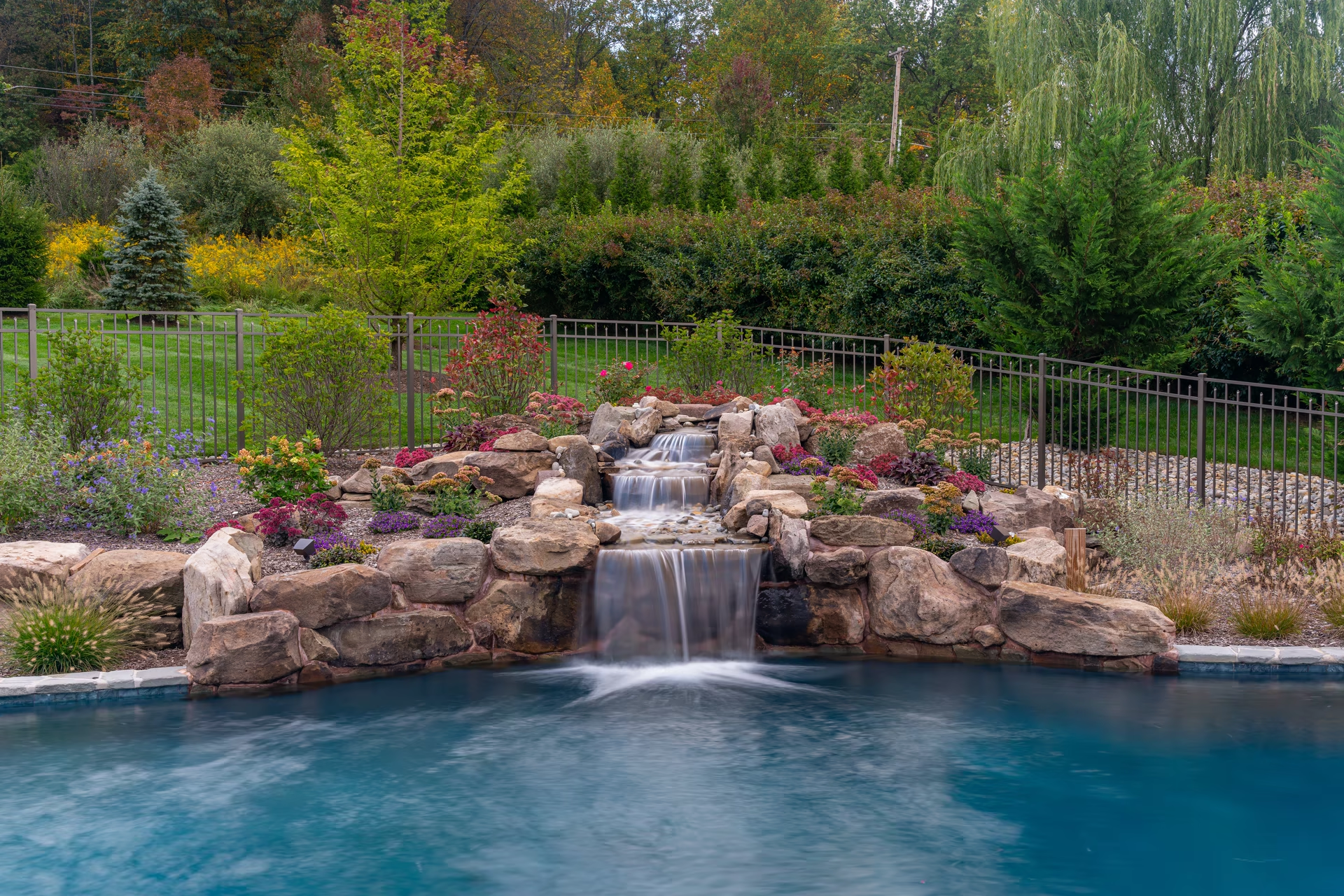
What Is a Multi-Tier Waterfall?
One-tier and two-tier systems have a fixed ceiling on drama: one drop, or two. Multi-tier removes the ceiling. It’s the configuration for a backyard with real elevation change, a client who wants sound as much as sight, or a pool feature meant to be the visual anchor of the whole project.
Structurally, multi-tier puts a system in AWS Custom System territory rather than Genesis-kit territory: no height limit, fully custom-engineered per project, built for a crew running equipment rather than a two-person no-tools install. That’s the trade-off — more scale, more crew, more install time — for a feature that commands the yard instead of accenting it.
How AWS Delivers It
Every multi-tier system arrives on numbered pallets. Matching numbers on adjacent panels show where each piece belongs, red crayon marks confirm orientation, and the whole system has already been dry-fitted, run with water, and leak-checked at the AWS facility before it was crated. Installation photos and video references ship with the system.
On site, the process is the same five-step sequence used on every AWS install, tier count aside: verify the footing, dry-fit and level, mortar and set, point the joints, then cover the lifting points and connect plumbing. The difference between tier counts isn’t the process — it’s how the upper panels are supported. The result: most systems, at any tier count, install in one to two days on site, because the complex work — templating, plumbing, structural engineering, leak testing — is already done before the pallets arrive. Add a grotto, a slide, or heavy boulder work to a multi-tier feature and the timeline can run three days or more, the same way documented deluxe- and ultimate-tier builds do.
How Support Scales From Tier to Tier
The one footing rule that matters most on a multi-tier job: only the bottom tier needs a load-bearing base, and on a gunite pool that base already exists in the pool beam.
| Tier | Support | Separate poured footing? |
|---|---|---|
| Bottom | Poured concrete footing on non-gunite pools — or the existing pool beam on a gunite shell | Only on non-gunite pools; a gunite beam is already the bearing base |
| Every tier above | Compacted crushed-stone base, built up to height | No |
Each upper panel overshoots the one below it, and a curb on the back retains the water between tiers — the same key-and-curb principle a two-tier system uses (there, a 4-inch curb), scaled up tier to tier. No caulking, no cement between tiers. Waterproof by design, not by mortar. The crushed-stone base also lets upper tiers move with freeze-thaw cycles, the same way dry-laid landscape steps do — a failure point most poured-in-place approaches don’t have.
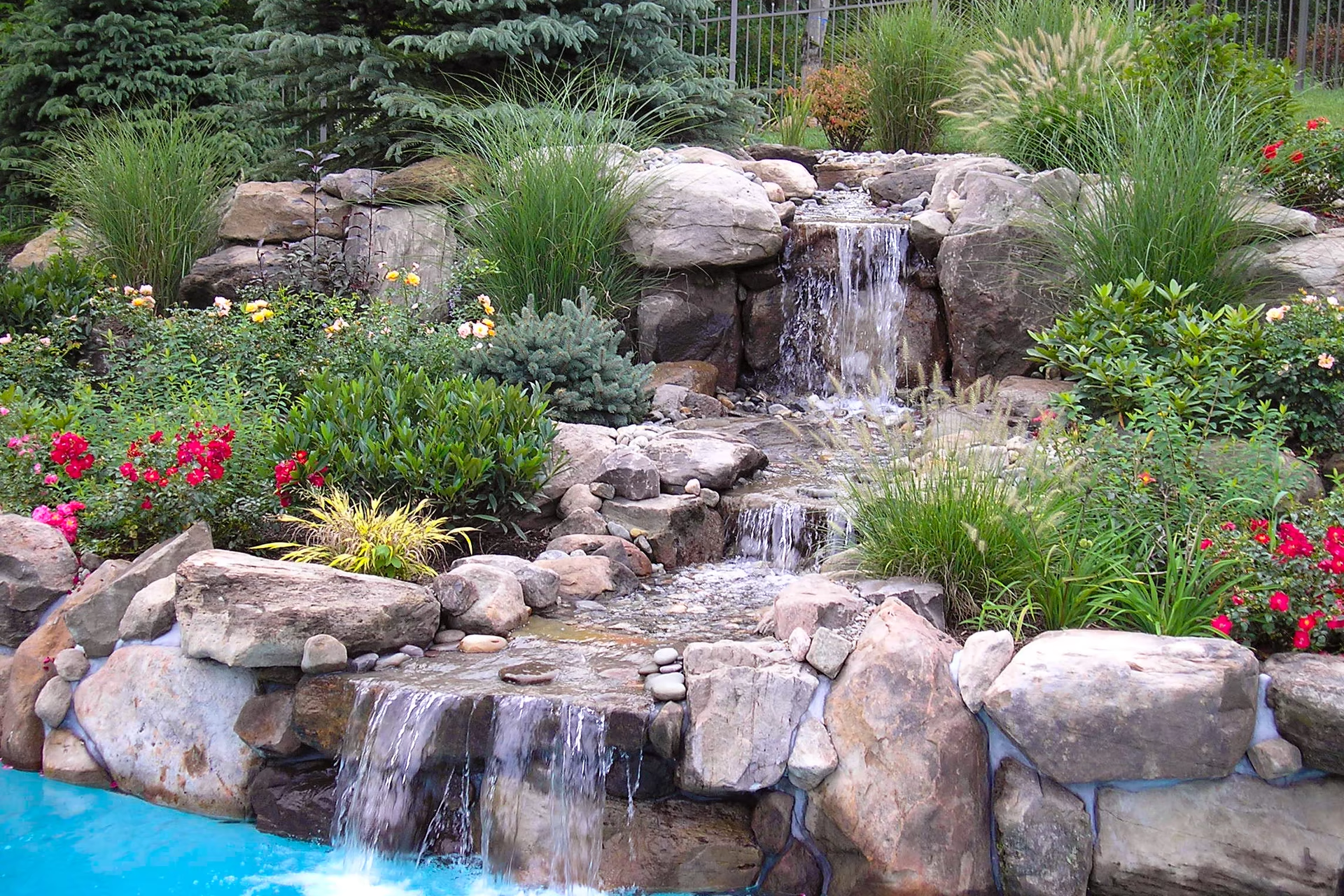
That single-footing rule is also a cost lever worth pricing into the job: a poured pad under every tier of a tall feature adds material and labor that a multi-tier AWS system simply doesn’t require above the first tier.
A few more numbers that scale with tier count:
- Panel count adds one main panel per tier, plus cover rocks per lifting point — the exact count comes from your plan drawing and varies by feature width.
- Crew size scales with the system, not a fixed headcount. Genesis-class kits run on two installers with no equipment; a documented 2.5×10-ft curved custom feature ran three crew plus a machine. Multi-tier work, with its added lifting points, tends toward that larger-crew end.
- Field plumbing connections stay low regardless of tier count — most systems need only one or two on-site connections, because the rest is plumbed and pressure-tested at the facility.
- Flow follows the same lip-width math as any natural-stone rock waterfall: figure roughly 30 GPM per foot of lip width for an average, balanced sheet, and more for a louder whitewater cascade. On a multi-tier system, that number applies per cascade, so total flow and pipe size should be specced against the widest tier.
Built to the Job, Not to a Catalog
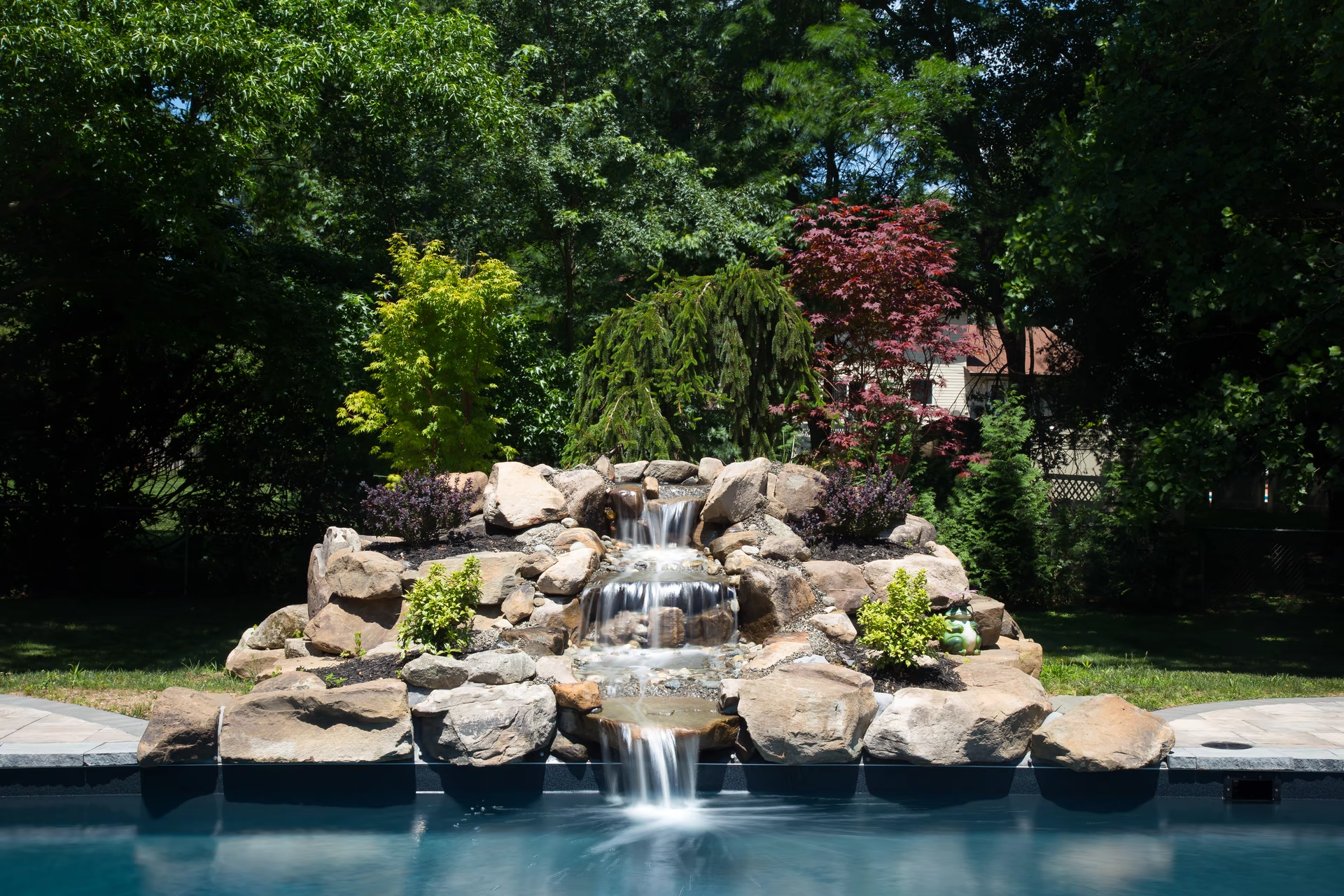
Multi-tier systems are fully customizable: any height, any depth, any number of cascades. Discharge direction — straight, angled, or opposing — is set at install, so the same core system can read as a single dramatic drop-down or a wide, multi-directional cascade depending on how the client’s yard and pool are laid out. There’s no waterfall-building experience required on any of it — the numbered panels, dry-fit sequence, and plan drawing carry the crew through it the same as a one-tier job.
See the Tier-Specific Systems
Multi-tier is the large-format option. If the project calls for a single drop or a two-level feature instead, the AWS product line covers those too:
Frequently Asked Questions
What is a multi-tier waterfall system?
An AWS configuration with three or more cascades, custom-engineered to a project’s exact height, depth, and cascade count. It ships pre-plumbed, numbered, and leak-tested at the facility, and it falls under AWS Custom Systems — no height limit — rather than the smaller Genesis kit line.
Do all tiers on a multi-tier waterfall need their own concrete footing?
No. Only the bottom tier requires a poured concrete footing (or the pool beam, on gunite). Every tier above that sits on a compacted crushed-stone base built up to height — no additional footings required.
How many cascades can a multi-tier waterfall have?
Any number. Multi-tier systems are fully customizable to any height, depth, and cascade count, with discharge direction — straight, angled, or opposing — set at install.
How long does a multi-tier waterfall take to install?
Most systems, at any tier count, install in one to two days on site, since the templating, plumbing, and leak testing happen at the AWS facility before the system ships. Pairing a multi-tier feature with a grotto, slide, or heavy boulder work can extend that to three days or more.
How does an AWS multi-tier system stay watertight without caulking between tiers?
Each upper panel overshoots the panel below it, and a rear curb retains the water — waterproof by design, not by mortar. No caulking or cement is used between tiers, and the compacted-stone base lets upper tiers move naturally with freeze-thaw cycles instead of cracking a rigid joint.
Is a multi-tier waterfall a Genesis kit or a custom AWS system?
A custom AWS system. Genesis kits top out around 18 inches and are built for a two-person, no-equipment install; multi-tier systems have no height limit and are engineered per project, with crew and equipment scaled to the job.
Ready to Spec a Multi-Tier System?
Send the AWS team your pool dimensions, the elevation you’re working with, and how many cascades the project calls for. Every system ships numbered, pre-plumbed, and leak-tested — ready to set. No pressure, no obligation, just a conversation about what’s possible.